Commercial Roofing Services
Commercial Roof Insurance Claim Assistance in Spartanburg, SC
Getting the Full Roof Damage Scope Into Your Insurance Claim
Most roof insurance claims don't fail because the damage wasn't real. They fail because the scope that made it into the claim file was incomplete, so the payout only covered part of what the roof actually needed. We inspect, document, and write repair scope the way an adjuster needs to see it, so the claim reflects the full extent of the damage rather than just the parts that were easy to spot from the parking lot.
What a Roof Insurance Claim Actually Requires
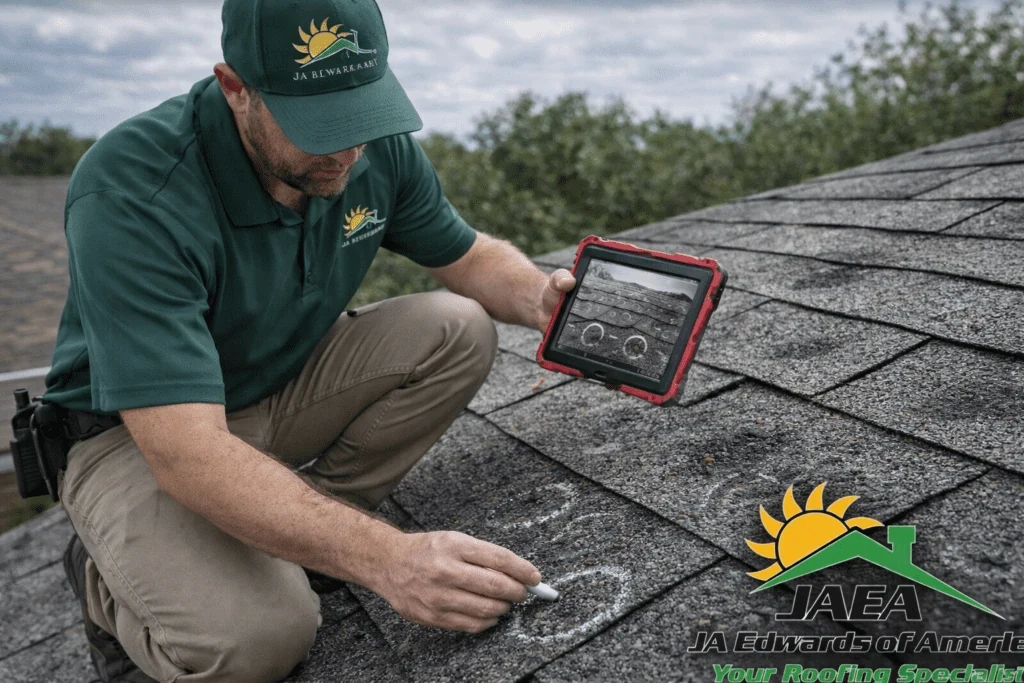
An adjuster works from what's in front of them: photos, measurements, and a written scope tied to a specific cause of loss. A roof that's clearly damaged can still get underpaid if the documentation doesn't connect each finding to a covered event, or if the scope leaves out code-required upgrades and matching that a partial repair would trigger. We build the file section by section, with wide shots for context and close-up photos of each damage point, so nothing has to be explained after the fact.
For buildings along the I-85 corridor near the BMW plant and its supplier network, roofs tend to be large, low-slope, and heavily used, with rooftop mechanical equipment that can hide damage a ground-level walk would miss. We document curb flashing, equipment pads, and drainage the same way we document the field membrane, since an incomplete scope on those details is one of the more common reasons a claim comes back underpaid.
Meeting the Adjuster on the Roof
We can walk the roof with an adjuster directly, working from the same photo set and measurements already in the file. Having someone on site who inspected the roof and can point to specific findings tends to move a claim along faster than a file reviewed without anyone available to answer questions about what's being shown.
We describe what we observed and let the documentation speak for itself. We're your roofing contractor, not a public adjuster, we don't characterize what a claim outcome should be or represent the owner in coverage discussions with the carrier; filing and negotiating the claim stays between the owner, their broker, and the insurance company.
Mill Conversions, Downtown Buildings, and Older Roof Stock
A lot of Spartanburg's older commercial buildings, from mill-conversion projects to storefronts near Morgan Square, carry roofs with a longer repair history than a newer distribution building would. That history matters in a claim, since an adjuster will want to know what portion of the damage is new versus pre-existing wear. We document that distinction as clearly as the evidence supports, and where old invoices or prior contractor photos exist, we fold those into the file to establish a clearer before-and-after picture.
Complete Scope, Not the Obvious Damage Alone
Framing a claim around the full, accurate scope means nothing legitimate gets left out: code-required upgrades triggered by the repair, matching requirements where a partial replacement would leave mismatched materials, and secondary damage that isn't visible until the membrane is opened up. We itemize all of it in the repair scope so the owner and the adjuster are working from the same complete picture rather than negotiating over a partial one.
When a Claim Comes Back Denied or Underpaid
A denial or a low estimate is often a documentation gap rather than a coverage problem. We can supplement the original file with additional photos, a follow-up roof walk, or a more detailed written scope addressing whatever the carrier's estimate left out. That doesn't guarantee a different outcome, but a thin file is one of the more fixable reasons a claim doesn't reflect the real damage.
Common Questions About Roof Insurance Claims
Does insurance cover roof replacement?
It depends on the policy and the cause of loss. Storm, hail, and wind damage are typically covered perils on a commercial property policy, while gradual wear or deferred maintenance usually isn't. We document what we find and let the owner and their carrier determine how the policy applies.
What's the claim process for a damaged commercial roof?
Generally: the loss is reported to the carrier, a documentation and repair scope is prepared, an adjuster reviews the property (often with a roof walk), and a settlement is reached based on that scope. We support the documentation and repair-scope steps directly.
What if my claim gets denied?
A denial can sometimes be revisited with additional documentation, particularly if the original file was thin on measurements or photos. We can prepare a supplemental report addressing specific points in a denial letter.
Should I repair or replace after storm damage?
That depends on the roof's age, the extent of the damage, and whether a partial repair would trigger code-required upgrades that make a full section replacement more practical. We lay out both options with cost and scope detail so the owner can weigh it against what the policy covers.
Do you file the claim or negotiate with the insurance company on our behalf?
No. We inspect, document, and write repair scope so you and your adjuster are working from an accurate picture of the damage. Filing and negotiating the claim stays with the owner and their insurance representative.
How fast can you document damage after a storm?
Usually within a day or two, sooner if there's active water intrusion. Getting documentation done early matters, since debris cleanup and continued weather exposure can obscure the original damage pattern.
Related coverage: our roof insurance documentation support page details how we build a claim-ready file, and our hail damage claims and wind and storm damage claims pages cover the two perils that drive most claims in the county. For roofs at risk from winter weather, see snow and ice damage claims.
Ready to document your roof's condition?
Request a Roof AssessmentReady to review the roof scope?
Request a Roof AssessmentCoverage: Spartanburg and Upstate South Carolina
Building types: Manufacturing, logistics, retail, and institutional
Service: Assessment, repair, replacement, maintenance, and coatings
Systems: TPO, PVC, EPDM, metal, modified bitumen, and coatings
Documentation: Scope, warranty, and closeout records
Response: Spartanburg County and nearby Upstate communities