Roof Systems
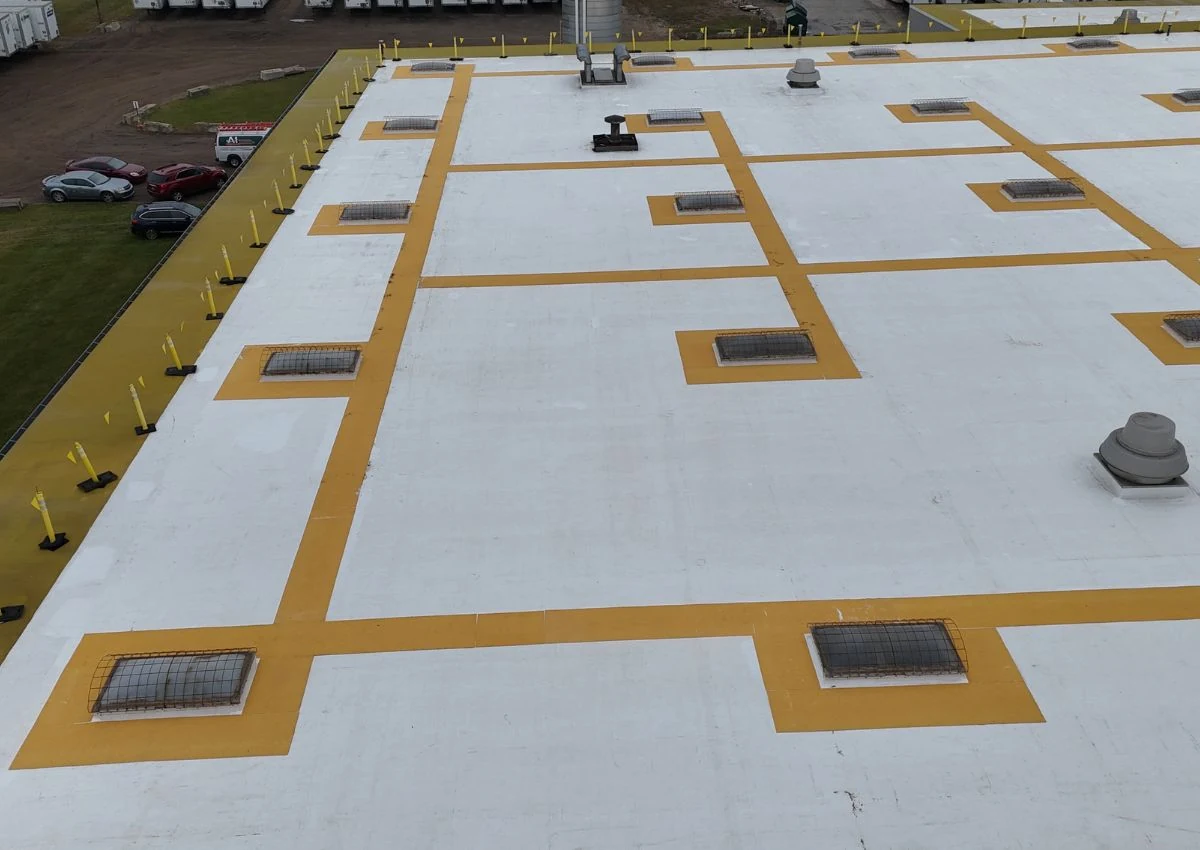
PVC Roof Systems in Spartanburg, SC
PVC Membrane Specification for Chemical and Grease-Exposed Roofs
PVC single-ply membrane earns its place in a Spartanburg County roofing spec when a building has rooftop exposure to grease, oils, or specific chemicals that would degrade TPO or EPDM over time. Restaurant exhaust, food processing facilities, and some manufacturing operations along the I-85 corridor are the buildings where we bring PVC into the conversation first rather than defaulting to TPO.
Why PVC Handles Grease and Chemical Exposure Differently
PVC's plasticized vinyl chemistry resists petroleum-based contaminants and certain chemicals better than TPO or EPDM, which is why manufacturer data sheets for PVC membranes list chemical resistance tables that TPO sheets typically don't emphasize to the same degree. Kitchen exhaust grease landing on a low-slope roof over years can soften or degrade unprotected TPO seams, while PVC is formulated specifically to hold up under that kind of contact exposure. We see this most often on outparcel restaurant buildings near retail centers where the exhaust fan sits close to the roof edge and grease residue accumulates on the membrane surface directly downwind of the vent, well beyond what a routine roof cleaning schedule fully removes.
Membrane Construction and FPO Comparison
PVC is chemically distinct from TPO and FPO (flexible polyolefin) membranes despite all three being installed and welded similarly. Some manufacturers offer hybrid or FPO-based membranes marketed with PVC-like chemical resistance claims, and we read the actual chemical resistance data sheet for whichever specific product is being proposed rather than assuming any thermoplastic membrane performs the same under grease or solvent exposure.
Heat Welding and Seam Standards
PVC seams are hot-air welded similarly to TPO, and the same field quality control practices apply: cold pick testing every seam, checking weld and lap width against manufacturer minimums, and keeping a seam log on larger projects. PVC's welding temperature range and technique can differ slightly from TPO depending on the manufacturer's formulation, so crews working across both membrane types need to recalibrate equipment rather than running identical settings.
FM and UL Assembly Ratings
PVC assemblies carry their own FM 4470 wind uplift and UL 790 fire rating listings, tested with specific insulation and fastening configurations the same way TPO and EPDM assemblies are. On restaurant and food-service buildings we work on around Westgate and downtown Spartanburg, rooftop grease trap and exhaust equipment placement sometimes affects where fastener patterns and flashing details need extra attention, since equipment access points concentrate both foot traffic and contamination risk.
- Review the manufacturer's chemical resistance data sheet against the specific contaminants present on that roof
- Confirm whether a proposed membrane is true PVC or an FPO hybrid before comparing chemical resistance claims
- Match welding temperature and technique to the specific product's field manual
- Verify FM or UL assembly rating against actual insulation and fastening plan
- Plan flashing and access detailing around grease trap and exhaust equipment locations
- Log seam probe testing results for warranty and insurance documentation
Plasticizer Migration and Long-Term Flexibility
Older PVC formulations were sometimes associated with plasticizer migration over decades of service, which could lead to gradual membrane stiffening. Current-generation PVC products from major manufacturers use reformulated plasticizer systems intended to reduce that long-term migration, and product data sheets typically reference accelerated weathering test results supporting extended flexibility claims. We look at the specific product's published test data rather than relying on generic assumptions about PVC aging behavior that may not reflect current formulations.
Thermal Performance in Upstate Heat and Humidity
Spartanburg's hot, humid summers put PVC through the same repeated thermal cycling as other thermoplastic membranes, and white and light-colored PVC options are common specifically to manage rooftop surface temperature on buildings with significant cooling load. Reflective PVC membranes carry their own reflectivity and emissivity ratings that we check against the specific product being quoted when energy performance is part of the owner's decision criteria.
Warranty Structure
PVC warranty terms follow the standard industry pattern of material-only and NDL tiers, with specific term lengths and inspection requirements varying by manufacturer and installer certification level. Given PVC's role protecting against grease and chemical exposure, we confirm with the manufacturer in writing whether the specific contaminants present at a given site fall within the warranty's covered exposure conditions before finalizing the spec, since some warranties exclude certain aggressive chemical exposures even on a PVC-rated system.
Questions on PVC Roof Systems
Is PVC always the right choice for restaurant roofs?
It's frequently the best choice where grease exposure is significant, but the right system depends on the specific exhaust configuration, roof age, and budget. We evaluate each site rather than defaulting automatically to PVC for every food-service building.
Does PVC cost more than TPO?
PVC generally carries a higher material cost than standard TPO, reflecting its specialized chemical resistance formulation, though the total installed cost difference varies by project scope.
Can PVC be installed over an existing TPO or EPDM roof?
Recover feasibility depends on the existing roof's condition, moisture content, and code requirements, evaluated case by case rather than assumed.
How do we know if our roof needs PVC instead of TPO?
If there's regular grease, oil, or chemical contact on the roof surface from rooftop equipment or nearby operations, PVC is worth evaluating. We can assess exposure conditions during a site visit.
Do PVC seams require different maintenance than TPO seams?
Routine inspection practices are similar, though grease-exposed PVC roofs benefit from periodic cleaning around contamination-prone areas to preserve long-term seam and membrane performance.
Ready to review the roof scope?
Request a Roof AssessmentCoverage: Spartanburg and Upstate South Carolina
Building types: Manufacturing, logistics, retail, and institutional
Service: Assessment, repair, replacement, maintenance, and coatings
Systems: TPO, PVC, EPDM, metal, modified bitumen, and coatings
Documentation: Scope, warranty, and closeout records
Response: Spartanburg County and nearby Upstate communities