Roof Systems
60-Mil TPO Roofing in Spartanburg, SC
60-Mil TPO Membrane Specification for Spartanburg Facilities
Sixty-mil TPO is the baseline single-ply thickness we specify most often on Spartanburg County reroofs, from strip retail along Reidville Road to distribution shells near the I-85 corridor. It balances puncture resistance and hot-air seam performance against material and labor cost, and it fits the budget range most property managers are working with when a roof system is nearing the end of its warranty term.
What 60-Mil Means on the Spec Sheet
The 60-mil designation refers to overall membrane thickness, not the thickness of reinforcement scrim alone. On a fleece-backed or reinforced sheet, that total includes the internal polyester scrim that carries most of the tensile and tear load. Manufacturer spec sheets list breaking strength, tear strength, and elongation figures for 60-mil product separately from 45-mil and 80-mil, and those numbers matter when an insurer or building department asks for documentation on an existing roof.
We pull the current product data sheet and safety data sheet for whatever TPO line we are quoting and hand both to the property owner before tear-off starts, not after. On assemblies where hail or wind uplift documentation will be requested later, having the exact sheet on file saves a call to the manufacturer six months into a claim.
Seam Welding and Field Quality Control
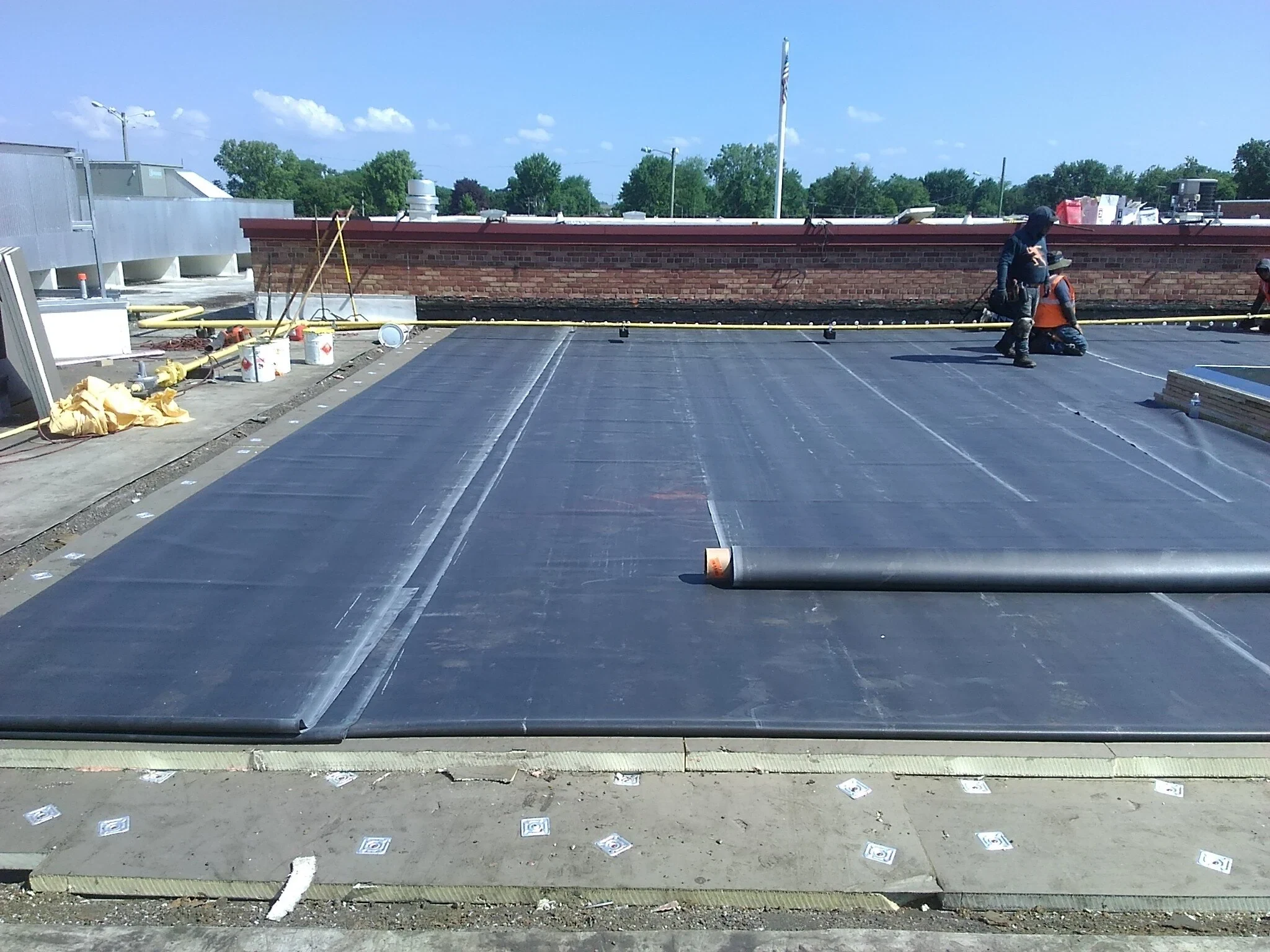
TPO seams are hot-air welded, and 60-mil sheet gives welders enough material thickness to tolerate normal field variation in probe temperature and drive speed without burning through. We probe every seam with a cold pick after welding and keep a seam log for the job, which is standard practice on any roof large enough to require FM Approvals oversight or a manufacturer inspection at closeout.
Lap width and weld width both get checked against the manufacturer's minimum rather than relying on a visual pass alone. A seam that looks welded from three feet away can still fail a pick test at the edge, and that is the failure mode most commonly cited in early TPO warranty denials. On larger roofs we assign a dedicated quality control walk after each day's welding rather than batching inspection to the end of the job, since catching a bad seam the same day it's welded is far cheaper to fix than reopening a completed section weeks later.
FM 4470 and UL 790 Considerations
Most 60-mil TPO assemblies carry FM 4470 approval ratings for wind uplift and UL 790 Class A fire ratings when installed as part of a tested assembly, meaning insulation type, fastening pattern, and deck type all have to match the tested configuration in addition to the membrane itself. A building owner cannot swap insulation board mid-project and assume the wind uplift rating still applies. We confirm the assembly number against the current FM RoofNav or UL listing before ordering material, particularly on buildings near I-85 where wind exposure category can push the required uplift rating higher than a comparable inland site.
Warranty Structure
Manufacturer warranties on 60-mil TPO generally split into two categories: a material-only warranty and a full-system or NDL (no dollar limit) warranty that covers labor and material for leaks caused by the covered system. The NDL warranty requires an approved applicator to install the roof and often requires manufacturer inspection at tear-off and again at completion. We walk owners through what triggers a warranty denial before the contract is signed, because vague warranty language is one of the most common sources of dispute we see on older buildings changing ownership.
- Confirm membrane thickness and reinforcement type against the current spec sheet before ordering
- Match insulation, fastening pattern, and deck type to the tested FM or UL assembly number
- Log every welded seam and probe test result during installation
- Verify whether the warranty is material-only or full NDL before signing
- Document manufacturer inspection dates at tear-off and at closeout
- Keep the product and safety data sheets on file for insurance and code documentation
Thermal Cycling in Upstate Summers
Spartanburg's humid subtropical summers put TPO through repeated daily thermal cycling, with membrane surface temperatures well above ambient air temperature on a low-slope roof under direct sun. TPO's thermoplastic chemistry allows some expansion and contraction without the membrane hardening the way older single-ply materials did, but the seams and flashings are still the first place that stress shows up over time. We factor expected thermal movement into fastening spacing and flashing detail, especially at parapet transitions and rooftop equipment curbs where movement is concentrated.
Hail is the other regional factor that shapes our 60-mil recommendation. Upstate South Carolina sees enough spring hail activity that insurers increasingly ask for documentation of a roof's impact resistance rating. Reinforced 60-mil TPO with a fleece backing performs differently under hail impact than unreinforced sheet, and we discuss that tradeoff directly with owners who are weighing 60-mil against a heavier 80-mil spec on buildings with higher hail exposure.
Questions We Hear From Spartanburg Property Owners
Is 60-mil TPO thick enough for a warehouse roof near BMW's Greer plant?
In most cases yes, provided the assembly is matched to the correct wind uplift and hail exposure rating for that specific site. We review site-specific wind exposure before finalizing a spec rather than defaulting to a standard assembly.
Does 60-mil TPO cost significantly less than 80-mil?
Material cost is lower, but the gap narrows once labor, flashing detail, and warranty tier are factored in. We provide both specs side by side so the owner can compare total installed cost rather than membrane price per square in isolation.
How long does a properly installed 60-mil TPO system typically last?
Manufacturer warranty terms for 60-mil TPO commonly run in the 15 to 20 year range depending on the warranty tier selected, though actual service life depends heavily on maintenance, rooftop traffic, and how well penetrations are detailed.
Can 60-mil TPO be installed over an existing roof?
Recover over an existing single-ply or built-up roof is sometimes possible if the existing deck and insulation pass a moisture survey and the code allows it, but full tear-off is required more often than not on older Spartanburg County buildings we inspect.
What documentation should we keep after installation?
Keep the signed warranty, the product data sheet, the seam log if provided, and any manufacturer inspection reports. That package is what an insurer or future buyer will ask for.
Ready to review the roof scope?
Request a Roof AssessmentCoverage: Spartanburg and Upstate South Carolina
Building types: Manufacturing, logistics, retail, and institutional
Service: Assessment, repair, replacement, maintenance, and coatings
Systems: TPO, PVC, EPDM, metal, modified bitumen, and coatings
Documentation: Scope, warranty, and closeout records
Response: Spartanburg County and nearby Upstate communities