Commercial Project Types
Distribution Center Roofing in Spartanburg, SC
Wind-Uplift Compliance and Warranty Terms for I-85 Distribution Buildings
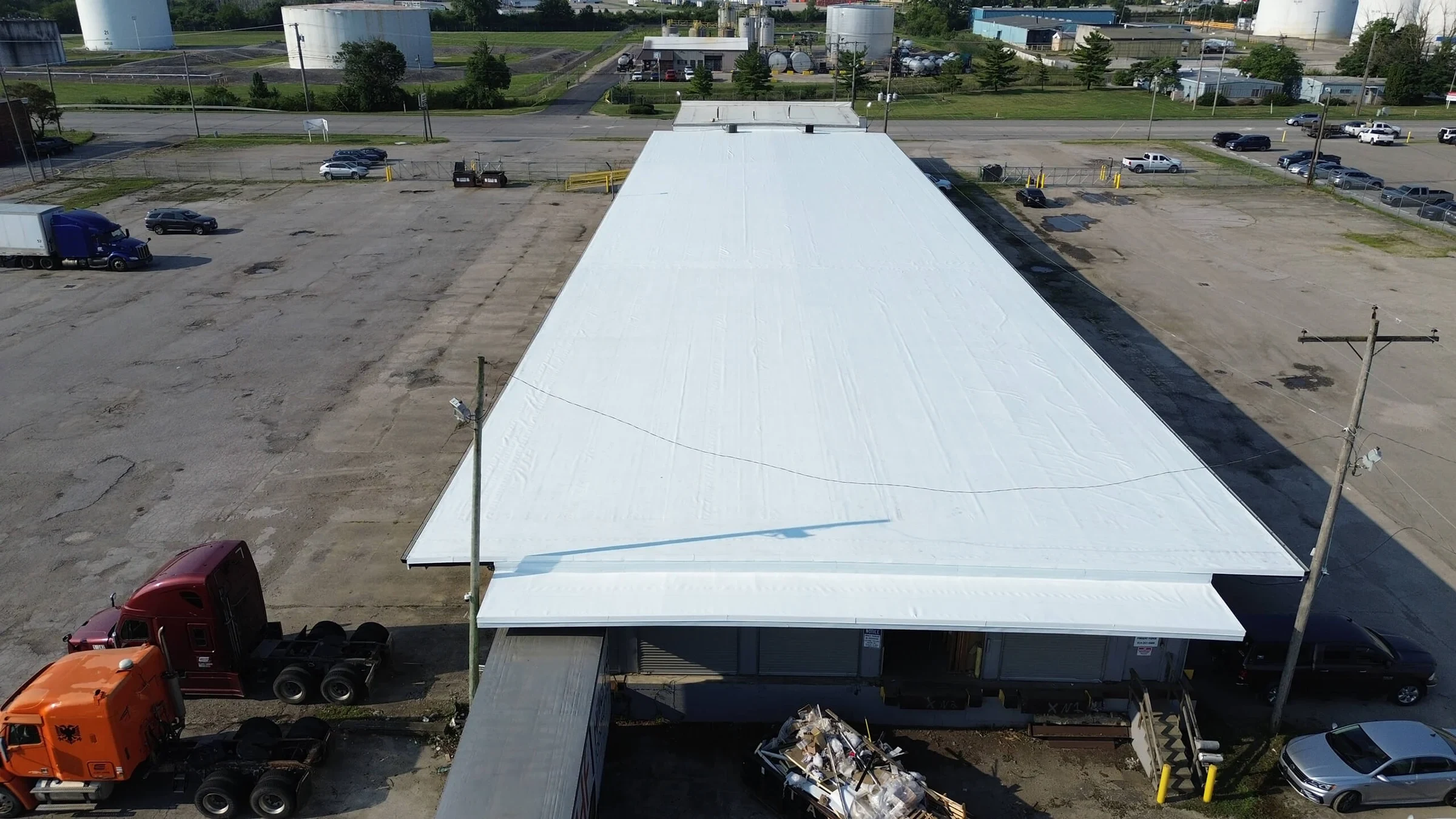
Distribution buildings along I-85 through Greer, Duncan, and Wellford run to a million square feet under a single membrane, built to serve rail-to-truck transfer at the SC Inland Port and the supplier network that feeds the Upstate's automotive assembly plant without being an assembly plant themselves. A roof failure on a plate this size carries specification consequences beyond the leak itself: wind-uplift design, manufacturer warranty terms, and code documentation all sit on the table before a work order gets written. We treat these roofs as a specification problem first and a repair problem second.
FM Approval Ratings and Wind-Uplift Design by Roof Zone
Large-field membrane assemblies on buildings this size are designed to a specific FM Approval rating, not a general wind-resistance assumption, and the perimeter and corner zones carry higher uplift pressure than the field of the roof under current ASCE 7 wind-load provisions. Upstate thunderstorm activity produces short, high-intensity wind events that load a roof edge and corner differently than a sustained tropical wind field would, so attachment density in those zones matters more here than the field attachment rate most owners ask about first.
We specify mechanical attachment patterns or fully adhered systems based on the rated uplift pressure for each zone of the building, not one blanket fastening pattern across the whole roof. On a plate the size of the buildings near Duncan and Wellford, the distinction between field, perimeter, and corner attachment is often the difference between a membrane that holds through a summer storm line and one that peels back at the parapet.
Manufacturer Detail Compliance and NDL Warranty Terms
Carlisle SynTec, GAF, Holcim Elevate, Johns Manville, Sika Sarnafil, and Versico each publish an approved detail package for flashing, penetrations, and seam configuration, and an NDL warranty is only as strong as the installation's adherence to that published detail, not the membrane thickness alone. We work from the manufacturer's current spec sheet for the assembly in place rather than a generic detail set, because a deviation at a single curb or drain can put an entire building's warranty coverage in question during a claim review years later.
Facility engineers evaluating a recover or reroof scope on one of these buildings should expect a bid package written in spec-section format: membrane type and thickness, insulation R-value and taper design, fastener spacing by zone, and flashing detail references tied to the manufacturer's current published standard. We write scope this way because a verbal note reading "match existing" does not hold up when a warranty claim gets filed partway through a twenty-year term.
- FM-rated wind-uplift design set separately for field, perimeter, and corner zones
- Manufacturer-approved detail packages for flashing, curbs, and roof penetrations
- NDL and prorated warranty terms confirmed before scope is finalized
- Tapered insulation design tied to published R-value and drainage requirements
- Seam probe and adhesion testing records for fully adhered membrane systems
- Storm-event documentation formatted for both manufacturer and insurer review
Thermal Cycling Across Long Membrane Runs in Humid Summers
A membrane field that runs several hundred feet without a break expands and contracts through the daily cycle Upstate summers produce: high daytime heat gain on the surface followed by humidity-driven condensation overnight. That movement concentrates at seams, curb flashing, and any point where the membrane is fixed rather than free to move, and over enough cycles it works fasteners loose at the deck well before it shows up as a visible leak.
We schedule seam probes and fastener pull-through checks on a cycle timed to that thermal movement rather than a flat calendar interval, since a membrane that passed inspection in March can show measurable seam stress by the end of a hot, humid August. On a roof field the size of the plates near Fairforest and Reidville, catching that stress before it becomes a seam failure costs far less than any repair that follows a leak.
Hail and Thunderstorm Wind Damage Documentation
Upstate thunderstorm cells bring hail alongside straight-line wind, and distinguishing hail bruising or wind-driven membrane displacement from ordinary wear is a documentation exercise as much as a repair one. We photograph damage by zone with enough date and location detail to support both a manufacturer warranty review and an insurer's claim process, and we describe what we find factually, bruised insulation, displaced membrane, granule loss pattern, without characterizing what an adjuster or manufacturer will ultimately decide.
That distinction matters because a warranty claim and an insurance claim ask different questions of the same damage. A manufacturer wants to know whether the damage falls inside or outside the NDL warranty's storm-damage exclusions; an insurer wants documentation tied to a specific storm date and location. We keep those two documentation trails separate from the start rather than assuming one report satisfies both processes.
Rail Spur and Drayage Yard Access Constraints
Buildings served directly by the SC Inland Port's rail-to-truck transfer, or positioned along the drayage routes feeding it, operate on a yard schedule that a roofing crew has to work inside rather than around. Material staging, crane placement, and dumpster location all have to clear active rail spur access and drayage lanes, and that constraint shapes the mobilization plan before it shapes the roof scope itself.
We coordinate staging plans with facility operations before crews arrive on site, confirming which yard zones stay clear during intermodal transfer windows and which are open for material drops. On a supplier-network building tied into an automotive plant's delivery schedule, a blocked yard lane has consequences that reach well past the roof itself.
Specification and Compliance Questions From Facility Engineers
What FM wind-uplift rating applies to a distribution roof near the SC Inland Port?
Rating requirements are set zone by zone under current ASCE 7 wind-load provisions, with corner and perimeter zones carrying higher uplift pressure than the field of the roof. We confirm the applicable rating from the building's wind-load documentation before specifying an attachment pattern.
Does an NDL warranty limit who can perform repairs on the roof later?
Most NDL warranties require manufacturer-approved contractors for repair work during the warranty term, and unauthorized repairs can void coverage even when the original installation was correct. We check the specific warranty terms in place before recommending any repair approach.
How do you document hail damage so both the manufacturer and the insurer accept it?
We photograph and log damage by roof zone with date and location detail, describing what we observe factually rather than asserting a conclusion. Manufacturer warranty review and insurance claims ask different questions of the same damage, so we keep the two documentation trails distinct.
Can roofing work happen without disrupting rail spur or drayage access?
Yes. We build the staging and mobilization plan around active rail and drayage windows before scheduling crew work, confirming which yard zones are available for material and equipment at each stage.
How often should seam and fastener checks happen on a large membrane field here?
We time those checks to the thermal cycle Upstate summers produce rather than a flat calendar schedule, since seam stress from expansion and contraction shows up faster during extended heat and humidity.
Ready to review the roof scope?
Request a Roof AssessmentCoverage: Spartanburg and Upstate South Carolina
Building types: Manufacturing, logistics, retail, and institutional
Service: Assessment, repair, replacement, maintenance, and coatings
Systems: TPO, PVC, EPDM, metal, modified bitumen, and coatings
Documentation: Scope, warranty, and closeout records
Response: Spartanburg County and nearby Upstate communities